Reading hockey

I think it was Ernst Baart who at the end of last year recirculated, or reposted, or restacked, or did whatever it is that forwards on something of interest, a coaches reading list for 2026.
Being somewhat bookish I had a look. Unfortunately, it quickly became apparent that these volumes were not for me. In fact, to take one example of the books on the list, the idea that reading something by an FBI hostage negotiator will help me be a better coach makes me want to run screaming into the hills. Which, given where I live, is a very long way indeed.
This is of course, me. I am sure these books are very good, very meaningful, very … something. I am sure that for some taking lessons from how the Chicago Cubs reorganised themselves into a fabulous, winning franchise is time well spent. As perhaps is learning about the aforementioned hostage negotiation techniques to better talk to the players one is coaching1. And no doubt paying attention to a unifying psychotherapy language to, well, I’m not actually sure what that was for. And we should definitely read a lot of books by proven leaders who lead well so we too can - lead.
My anathema to these kind of books is in part due to their often strident urgency. And the assumption that such books will drag me (kicking and screaming) into a world of leadership, self improvement, and potentially, if followed down one particularly narrowing path, to ‘woo’. Now, there is absolutely no doubt that I need all the improvement (self or otherwise) I can get. Yet, I find these books incredibly dull, often poorly written, regularly self-aggrandising (why do so many have the picture of the author on the cover) and their message appropriately (if you like that sort of thing) striped to some core simplified, sometimes simplistic, essence. They may be by successful leaders, they may well point the way to success, to successful, god forbid, management. But Elon Musk is successful. After a fashion.
Which brings me circuitously to the point. In the early days of The Hockey Site, Ernst used to ask his presenters what rule change they would like to see implimented (at the time it was a good bet they would say something about the aerial ball) and what book they would recommend to the audience of coaches. Recommendations often came from a similar shelf to those mentioned above. There was the ‘The Jelly Effect’, a book seemingly concerned with focused messaging. And “Why anyone should be lead by me” whose aim can presumably be inferred from the title. Both, for me, fall into the running, screaming and hills category.
I admit, it really is not good enough to say not this and not that (though it is always fun and sometimes cathartic), but instead I should think about what to recommend. And in doing so a whole treasure trove (or Pandora’s box depending on your inclination) of options opens up.
Really, what I want to read to improve my coaching are books like these.
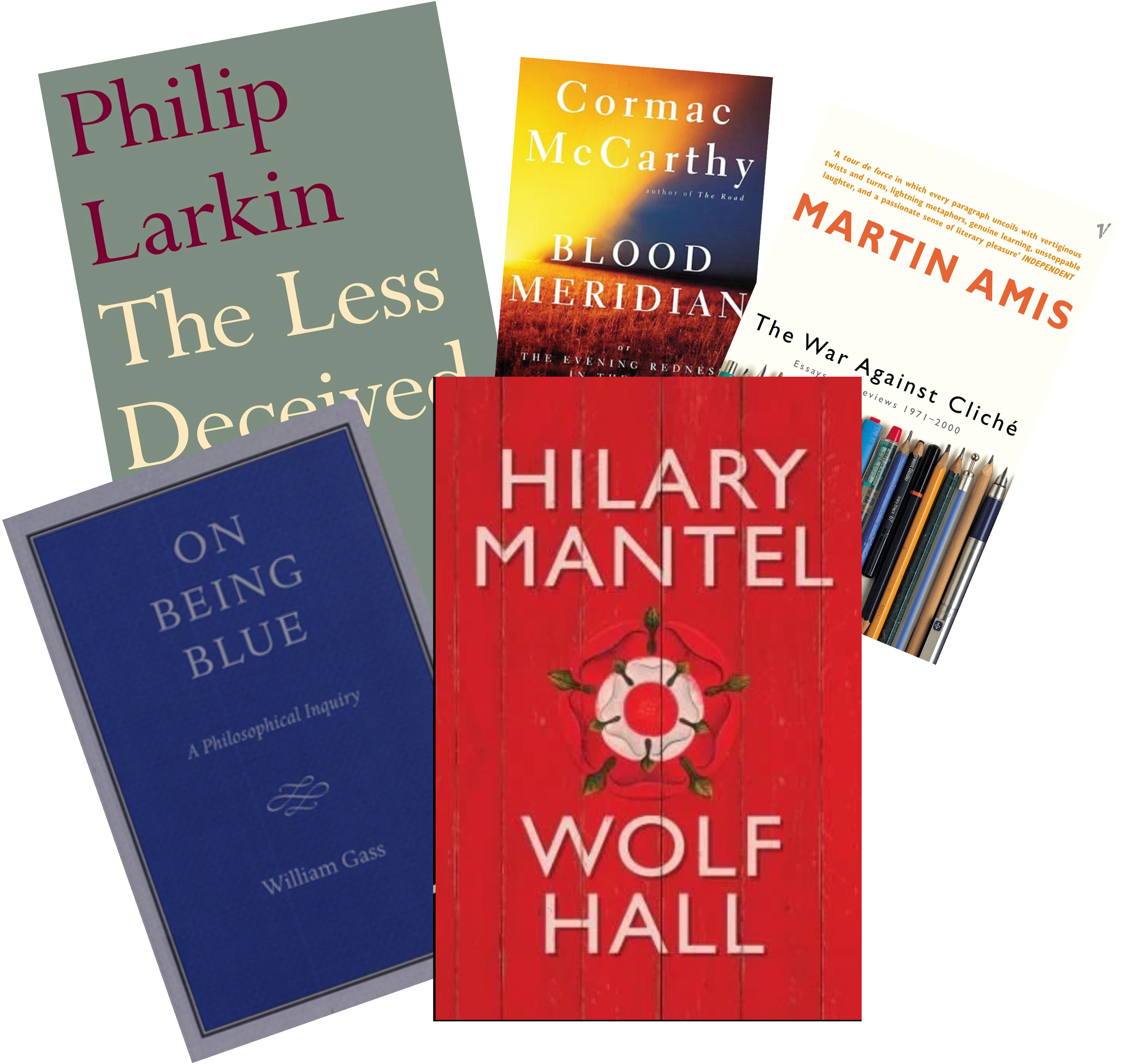
We are constantly told to streamline our message, to, as Mark Twain famously said, kill our darlings. And that, on the whole, seems very good advice. Clear messages are known to work, they help punch the information home, they are the advertiser’s ear worm. Isn’t it also important though, to have ensured a solid foundation has been built underneath the elevator pitch? If we are to reduce ourselves to a bon mot, how broad is the range of experience, of emotions, of empathy from which we are drawing these character limited sound bites? There is not an improving message in any of the examples above, not an advisory book in sight. Nor, for that matter anything to do with sport. What they represent I think, are books that use language (often wonderfully) to tell a story, to describe ideas, emotions, situations or places. They help us empathise with characters we might traditionally disparage. They seed our imagination for how to use words to form and express our own ideas, not simply parrot someone else’s. None of this is anathema to what we do as coaches.
I would recommend all of those illustrated above of course (though they are naturally just part of a huge library of other works that could have been shown) but only in the sense that they exemplify the approach that to reduce and refine ideas requires that we have a good grasp of the volume of those ideas, where the edges are and how they bleed, one into another. If we are wondering about how our team should press the opposition, does the tactic we choose look like a vintners crush, or a starling murmuration?
Let’s take an example from one of these books. One of my favourite authors is the late William Gass2, a literary critic and philosopher who along with a small handful of dense novels also wrote critical and review essays collected across five or six books. You can just skip to the next bit if you don’t fancy reading this extended excerpt. Alternatively you can relish in the chutzpah Gass exhibits here when writing, in one long opening sentence, about the supposedly simple concept - blue.
“Blue pencils, blue noses, blue movies, laws, blue legs and stockings, the language of birds, bees and flowers as snug as longshoremen, that lead-like look the skin has when affected by cold, contusion, sickness, fear; the rotten rum or gin they call blue ruin and the blue devils of its delirium: Russian cats and oysters, a withheld or imprisoned breath, the blue they say that diamonds have, deep holes in the ocean and the blazers which English athletes earn that gentlemen may wear; afflictions of the spirit - dumps, mopes, Mondays - all that’s dismal, - low-down gloomy music, Nova Scotians, cyanosis, hair rinse, bluing, bleach; the rare blue dahlia like that blue moon shrewd things happen only once in, or the call for trumps in whist (but who remembers whist or what the death of unplayed games is like?), and correspondingly the flag, Blue Peter, which is our signal for getting under way; a swift pitch, Confederate money, the shaded slopes of clouds and mountains, and so the constantly increasing absentness of Heaven (ins Blaue hinein the Germans say), consequently the color of everything that’s empty: blue bottles, bank accounts, and compliments, for instance, or, when, the sky’s turned turtle, the blue-green bleat of the ocean (both the same) and, when in Hell, its neatly, landscaped rows of concrete hut and gas-blue flames; social registers, examination booklets, blue bloods, balls, and bonnets, beards, coats, collars and chips, and cheese … the pedantic, indecent and censorious … watered twilight, sour sea: through a scrambling of accidents, blue has become the color, just as it’s stood for fidelity.”
Now imagine what you might come up with if you really had to think about say, the press, and the myriad ways in which such a word (at once both a noun and a verb [in Dutch that lovely translation - werkwoord, a working word] or indeed an adjective when needs must), can be interpreted: - to iron, flatten, smooth out, to squeeze and so express, to apply stress, what people do when in crowds, a machine once needed to put words on paper and so from there to the communication of news and the description of both constriction and dissemination; it’s a term for capture - when on looking into the bottom of the tankard a fellow finds a coin and a wholly different future; it is to reach the third day of a three day visit. And on.
When we set a press then are we thinking of ironing out the opposition, of constricting them, of forcing them onto the high seas? Or are we wondering if we might see it more as a gradual dissemination of form, a persuasion, an expression of intent.
Perhaps this is too much. We don’t as coaches need all these linguistic high jinks.
Yet perhaps we do. Or at least perhaps it would really help. The Sapir-Whorf hypothesis, or at least linguistic relativity, suggests that our depth of language, the breadth of our vocabulary, is tied to our cognitive understanding, words shape our view and interpretation of the world around us.
“The strong form of the Sapir–Whorf hypothesis claims that people from different cultures think differently because of differences in their languages. So, native speakers of Hopi perceive reality differently from native speakers of English because they use different languages, Whorf claimed. Few sociolinguists would accept such a strong claim, but most accept the weaker claim of linguistic relativity, that language influences perceptions, thought, and, at least potentially, behavior.”3
We might only see blue, a generic catch-all for that part of the visible spectrum. But Russians see more in blue, they see ‘siniy’ (dark blue) and ‘goluboy’ (light blue) and in fact don’t have a single word for ‘blue’, it can’t be translated like for like into Russian4. And because of this, Russian speakers are arguably able to discriminate between blues more intimately and in doing so communicate more of the depth, more of the nuance simply because their language allows perception across a greater part of the colour’s continuum than the single descriptor. Hence, differences in vocabulary, allows deeper cognitive interpretation of the subject.
Alright, perhaps a little too much now. So if all of this is simply not your cup of tea, and what you really want to read is something about sport then what about these examples.
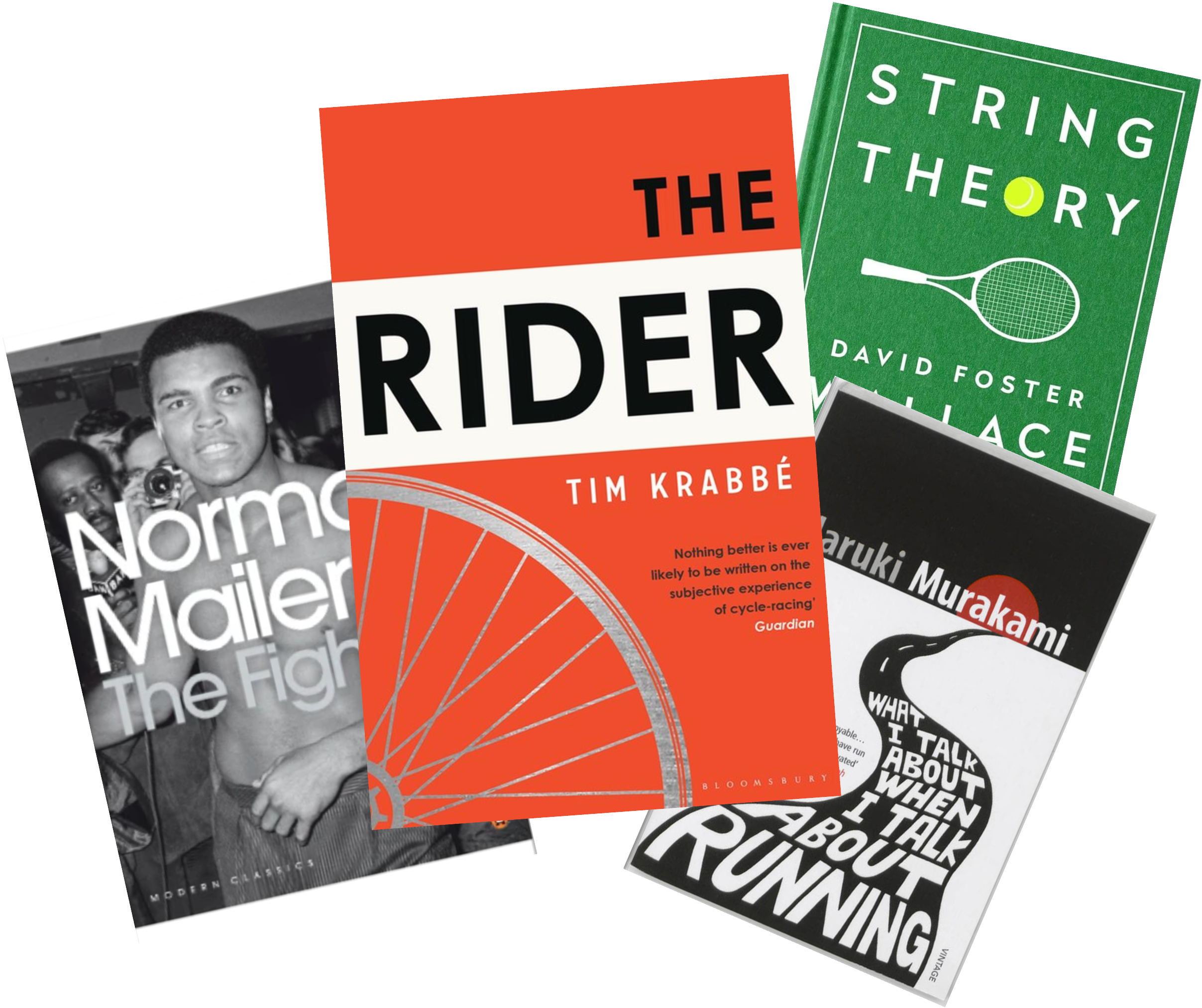
The principle is still the same. Here are Mailer’s ‘The Fight’, an extended reportage of the Rumble in the Jungle; David Foster Wallace’s excellent collection of essays on tennis encompassing an appreciation of Roger Federer as well as the dubious joys of being a spectator at the US Open; Murakami’s thoughts on long distance running and the Dutch journalist, novelist and chess player Tim Krabbé’s slim volume on competitive cycling. These are experiences of watching or doing sport that are very much not about the outcome specifically, but much more about the process5. These books allow one to be surrounded in language that is created by people who know how to use language (just look at the authors here!) to describe the experience of their sport, of an event with a depth, with perceptions and with emotional attachments all too often missing from more formulaic sporting reportage and certainly missing from the self-improvement industry.
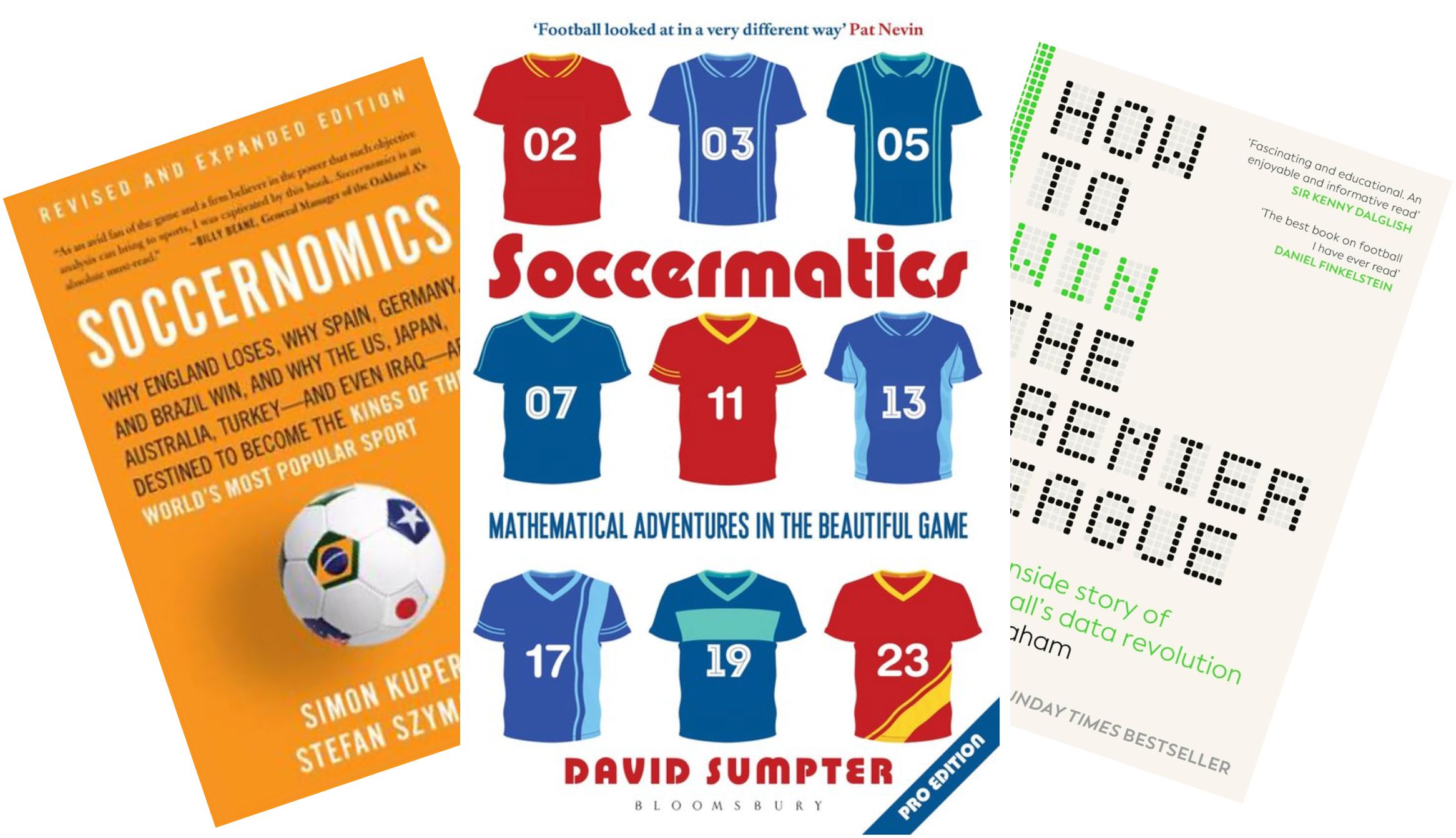
Closer to analytic home I might also suggest David Sumpter’s ‘Soccermatics’, a very good introduction to using statistics and analysis for digging into sport. Also, How to Win the Premier League, an interesting recent volume by Ian Graham, former head of analysis at Liverpool FC. And ‘Soccernomics’ by Simon Kuper and Stefan Symanski. All take an informative look into their sport (football in all these cases - I am sure there are similarly good books from other sports but there are none from hockey6 and the American sports are beyond me).
With that in mind I suppose I have to get back in line and, as Ernst used to ask, recommend one book to hockey coaches. And that book would be “Thinking Fast and Slow” by Nobel Prize winner, Daniel Kahneman.
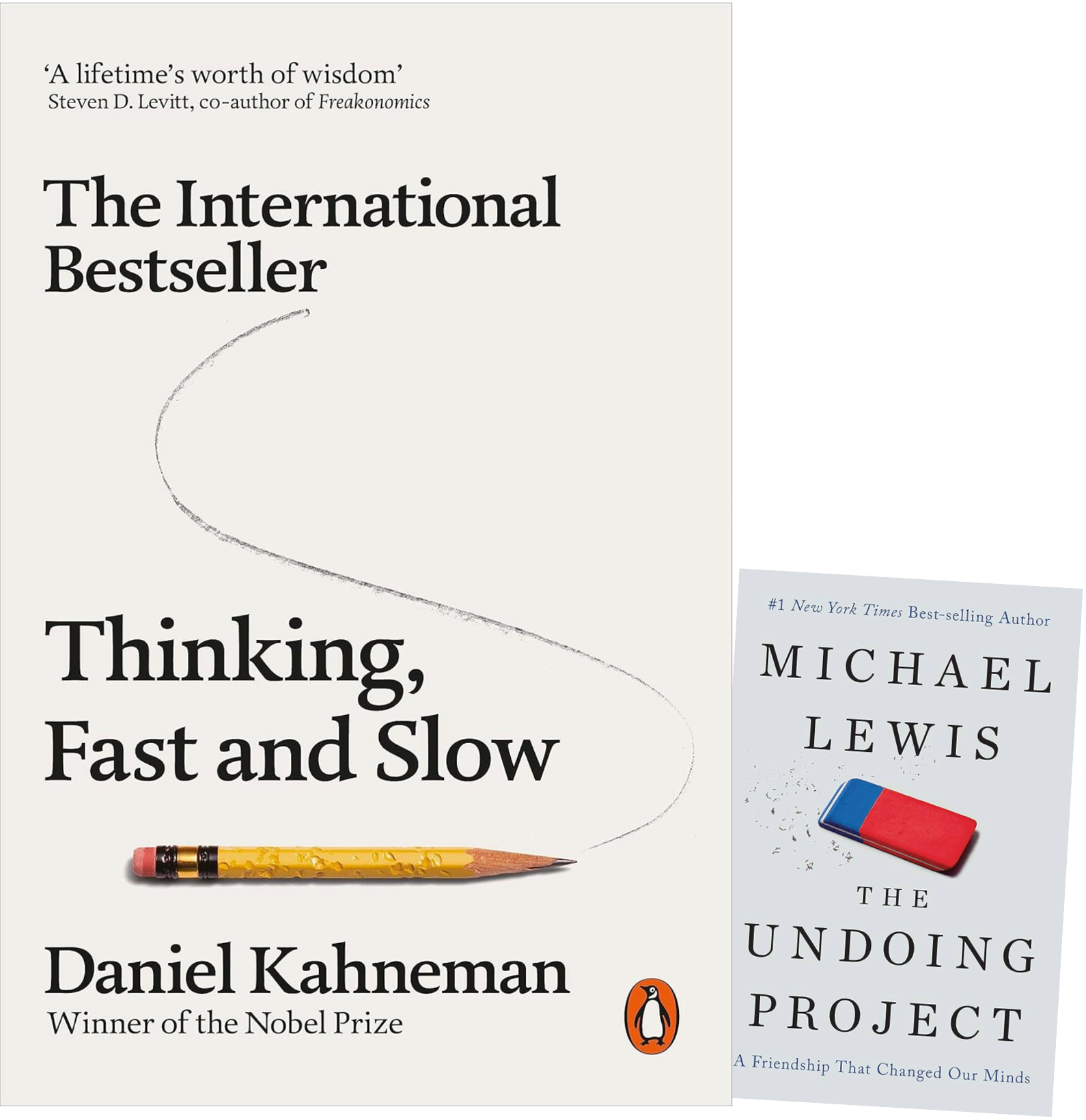
I’m not recommending Moneyball you’ll notice despite that being the obvious choice for a site that posts mainly about hockey analysis. And to be fair, despite the fact that Moneyball is a good read, whatever the “hate-the-[fill in boy/girl band name]-because-they-are-popular” knee-jerkerism that may be associated with it now that it is referenced whenever anyone mentions sports analysis (though perhaps mollified since Brad Pitt (the handsome bastard) played Billy Beane, to criticise the book is also to criticise Adonis - a much more slippery sleight to suggest). So not Moneyball, but you will note the author of Moneyball, Michael Lewis, also found Kahneman and his long time collaborator, Amos Tversky’s research sufficiently interesting to give it his full attention in, “The Undoing Project”.
Kahneman’s book7 is a fundamentally important reference for coaches in its combination of hard science, psychology and the varied analyses describing the way our minds influence what we think we see. In Thinking Fast and Slow you will come up against words like “heuristics” and theoretical considerations of how we view and categorise the world encapsulated in the dual-process model of the brain. It points to myriad ways in which we - as decision makers for the teams we coach - are open to bias, to the many factors that influence how we read and gain information from situations and indeed to which aspects of the game, of an isolated match, of a player, we decide to pay attention.
“It’s (one’s mind that is) hopelessly bad at the kind of statistical thinking often required for good decisions, it jumps wildly to conclusions and it’s subject to a fantastic suite of irrational biases and interference effects (the halo effect, the “Florida effect”, framing effects, anchoring effects, the confirmation bias, outcome bias, hindsight bias, availability bias, the focusing illusion, and so on).”
Notably Kahneman says that we can’t avoid these biases, they are inherent in us, and whether they stem from evolutionary, culturally, and or environmentally driven origins doesn’t really matter. What does matter is that being aware of them allows us to check out decision making, police our first approximations for the biases that may be prompting us to see the world (a small world in this context admittedly reduced as it might be to a player or teams performance) in a much less well considered manner.
Coaching has moved away from a didactic, top-down, tell and do approach to be largely replaced by a more flexible style. The effective questioning of players, helping them discover answers to on pitch situations, encouraging problem solving is a continuing narrative. For me, in my old fashioned, amateurish outlook, such ongoing dialogue doesn’t sit easily alongside the desire for a catchphrase, the view of a coach as leader rather than guide. Coaching is a conversation and becoming better at conversing comes from myriad sources and almost certainly not the over simplified message from a fortune cookie.
Though it surely begs the question, “to whom are these players hostage?” An unsettling thought.
Also William H. Gass, no idea why he dropped the initial for this volume.
Winawer J., Witthoft, N. and Frank, M.C. (2007). Russian blues reveal effects of language on colour discrimination. Proceedings of the National Academy of Sciences, USA. 104(19), 7780 - 7785. https://doi.org/10.1073/pnas.0701644104.
Not about the outcome reminds me of fishing and Sparse Grey Hackle’s, ‘Fishless Days, Angling Nights’, a quiet classic of fly fishing literature. One has to work quite hard to realise that only one fish is caught across all 224 pages. And also of Jamilon Mülders’ excellent talk on the Hockey Site from 2022: ‘Results versus Process’. He implied throughout that everything is a process.
Remember Horst Wein and his ‘The Science of Hockey’. Anyone? Anyone? No? Just me left then? More recently of course we have Andreu Enrich and his series of e-books. Good though some of them are, and good that there is someone writing about hockey, I do find his books either purely instructional (Small-sided games) or more semi-instructional vignettes despite the promise the title holds.